
Calibrating the TDS Sensor
Methodology:
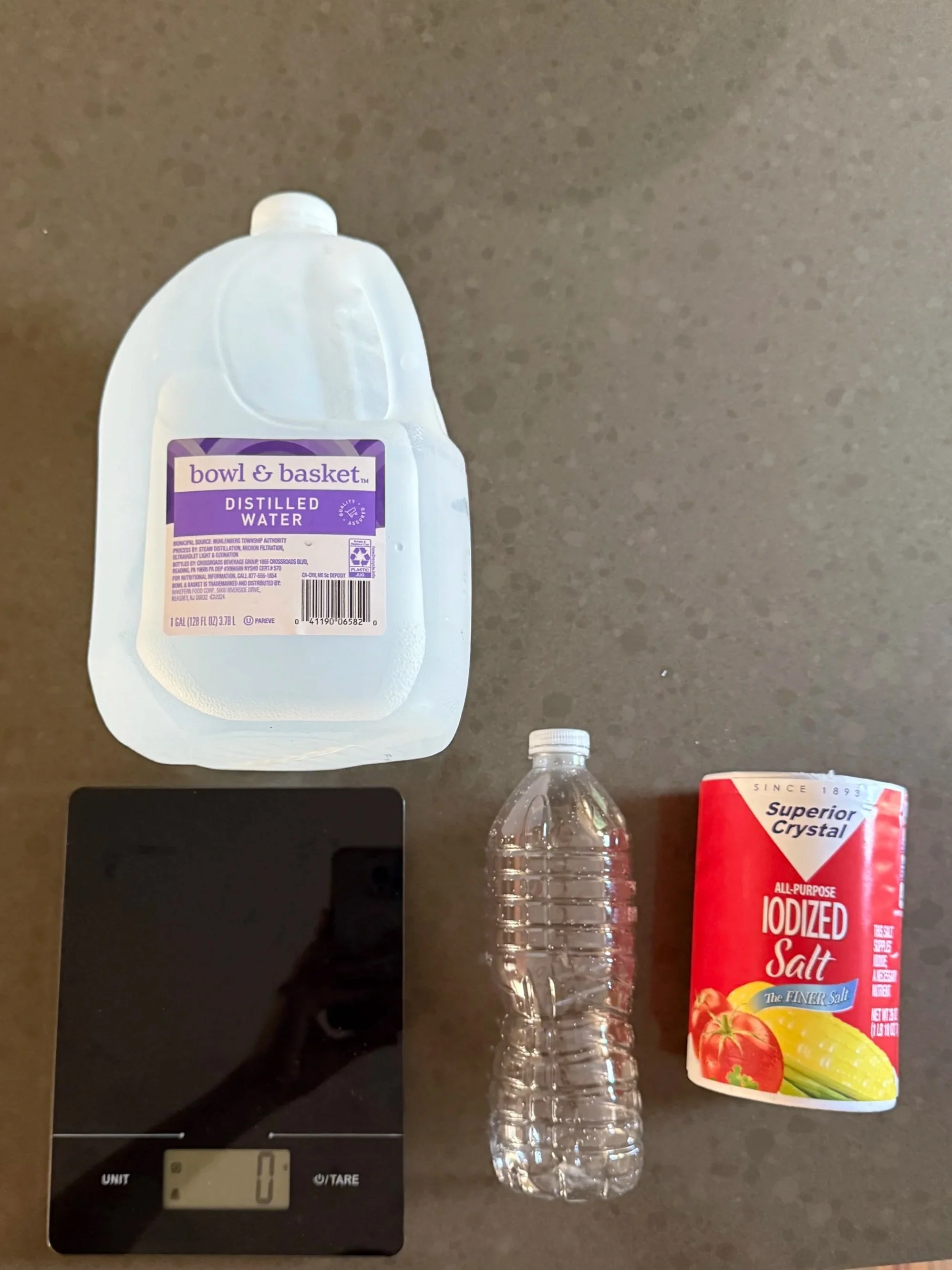
This sensor was calibrated using a base 1000 ppm solution. Specifically, this solution was created domestically through the following procedure: using a balance, 1 gram of table salt was added and thoroughly mixed into 1 liter of distilled water. After placing the sensor in the 1000 ppm solution, the code for the TDS sensor was adjusted accordingly until the sensor read 1000 ppm.
-
TDS (total dissolved solids) is a measure of exactly what one may think: all dissolved metals and solids. Regular drinking water, and especially tap water, contains an extremely unpredictable and usually high amount of dissolved minerals. However, distilled water is water that is boiled into a gas where the resulting water vapor is collected, cooled, and brought back to a liquid form: all minerals and solids are separated as they convert back into solid form allowing the water vapor to escape and be separated. Thus, these already present metals in non-distilled water would not allow for a proportionally accurate calibration to occur.
-
The quick answer is no. Especially in a domestic setting, it is virtually impossible to create a perfectly uniform mixture; however, the salt and the distilled water were stored thoroughly in order to ensure a rather well-mixed solution.
-
NO, it does not!
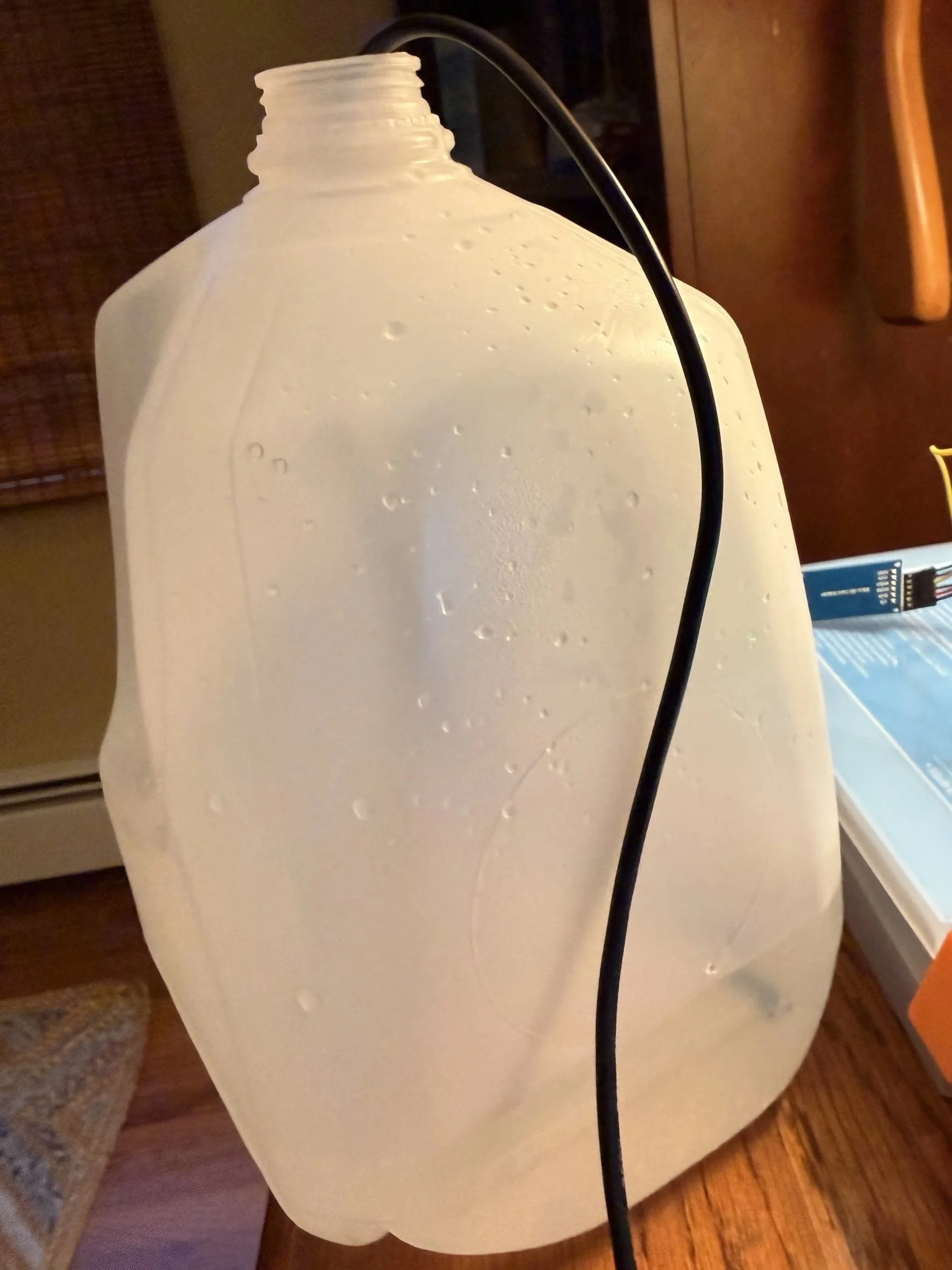
The more the distilled water is exposed to open air, the more it will naturally gain micro-metals.
Calibrating the pH Sensor
Methodology:
This sensor was calibrated utilizing 7.00 and 10.00 pH solutions. This base was purchased from a calibration solution supplier and its accuracy is denoted to be ± 0.01. Moreover, the pH probe was placed into the 7.00 pH solution first, the voltage from the motherboard was documented, and the same process was repeated for the 10.00 pH solution. This allowed for the sensor’s “slope” and “offset” to be calculated therefore calibrating the pH sensor.
-
In short, the “slope” is a sensor’s sensitivity: how much the raw electrical signal (voltage) changes in response to a physical measurement (in this case, the pH level). In other words, an Arduino mother board collects raw voltage changes for its given sensors. Then, using one’s respective code, it translates these raw voltage values into understandable readings (e.g. 1000 ppm, 7.00 pH, etc.). The “slope” essentially dictates the factor by which the voltage is translated: it’s a mediator.
-
A sensor offset is a constant value added to or subtracted from a sensor's raw reading to correct for baseline errors. It essentially compensates for miscellaneous hardware imperfections.
“Offset” = Expected Value — Actual Reading
(Calibration of the pH sensor using the 10.00 pH solution)
(Calibration using the 7.00 pH solution)